Background
Below is a high level overview of external projects and academic endeavours I have pursued outside of the current employment. Linked to each project is a detailed set of notes should anyone want to follow a similar path and try these projects for themselves.
Optimal Area Modelling
Summary
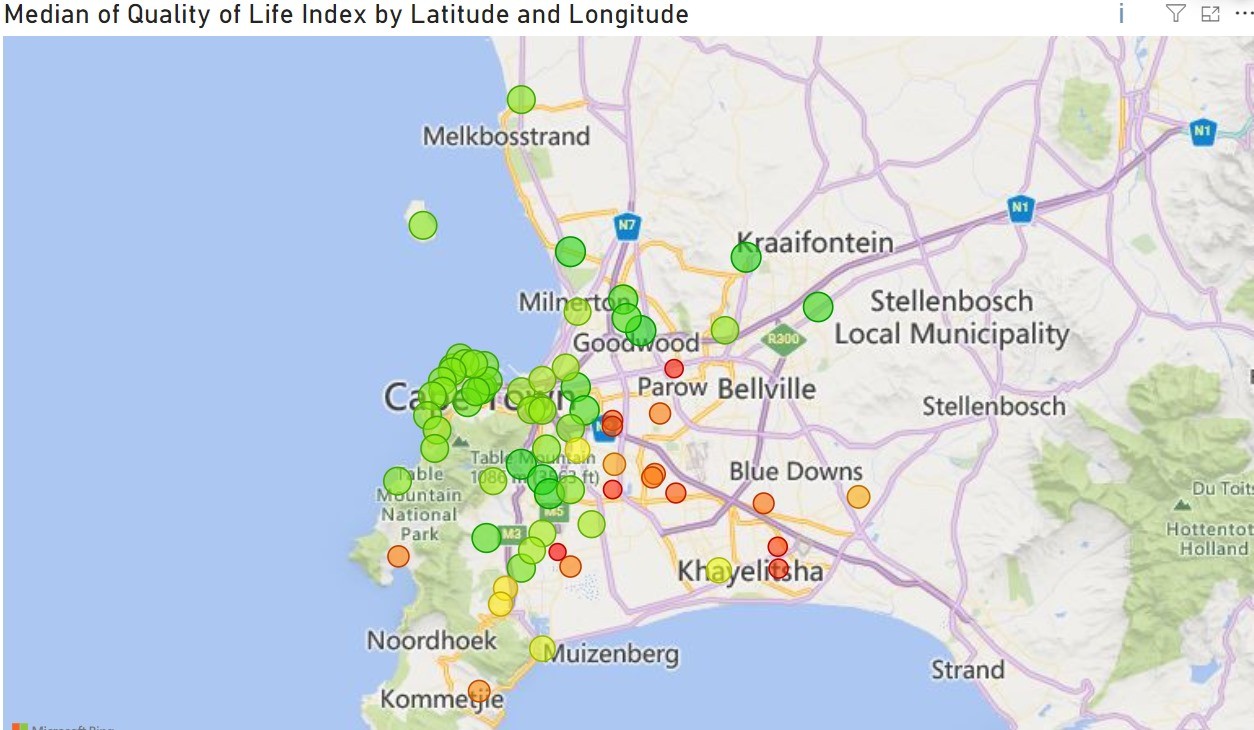
The objective of this project is to model and identify optimal living areas in Cape Town by considering both work location and various quality-of-life factors derived from census data.
Users can input their work location, which is then processed using the Google Maps API to calculate commute times to and from each suburb in Cape Town. This commuting data is integrated with a comprehensive dataset evaluating the quality of life across different postal codes, utilizing information gathered from government websites and South African Census data.
The findings are presented through a geospatial visualization created in Power BI, enabling users to easily identify the most suitable areas to live based on their individual needs and preferences.
This project draws inspiration from the work of Lloyd Richards, who effectively illustrated the application of data modeling in the context of real estate decisions.
Technologies Used
- Python
- Google Maps API
- Pandas
- Power BI Geospatial visualisation
- Beautiful Soup Web Scraping
Detailed Notes
Optimal Area - Project Outline
Introduction to Machine Learning
Summary
This project marked my journey from having no prior experience to completing my first-ever machine learning project. Inspired by the article End-to-End Machine Learning Project: Churn Prediction by Ramazan Olmez, I set an end goal of performing churn analysis on a publicly available telecommunications dataset. I then worked backward to identify the various aspects of statistics and coding I needed to learn along the way.
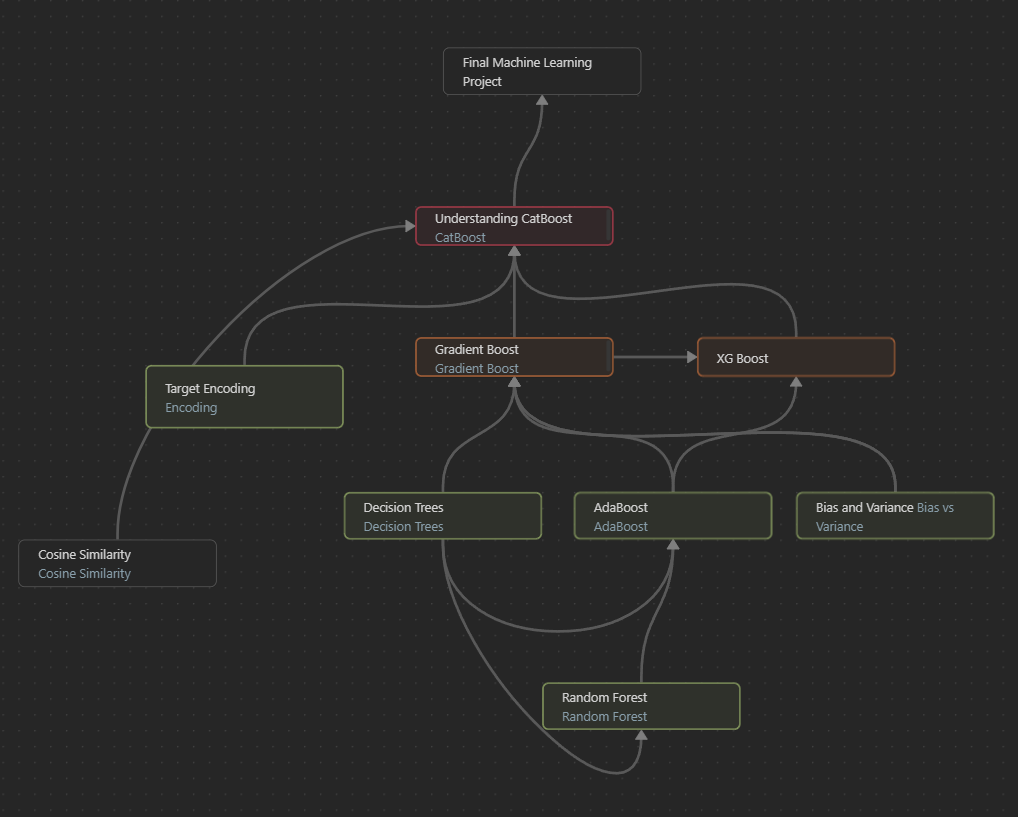
To organize my learning, I created a flow diagram outlining each key concept and skill. I documented my notes for every stage, covering the foundations of machine learning, statistics, and coding. These notes were designed not only to guide my own learning but also to help others eager to move beyond the hype and actually build their first machine learning project.
Throughout my journey, I found valuable resources, including Josh Starmer’s Stats Quest videos on YouTube, which clarified many complex topics, and the article Gradient Boosting Algorithm: A Complete Guide for Beginners by Anshul Saini, which provided essential insights into one of the key algorithms I explored.
While the primary goal was to complete the churn analysis, this project also serves as a practical resource for anyone looking to get started in machine learning.
Technologies Used
- Python
- Scikit-Learn
- Pandas
Final Project
Detailed Notes
- Classification Trees
- Decision Trees
- Bias vs Variance
- Encoding
- Random Forest
- AdaBoost
- Gradient Boost
- Cosine Similarity
- CatBoost
Volunteer Web Development
Summary
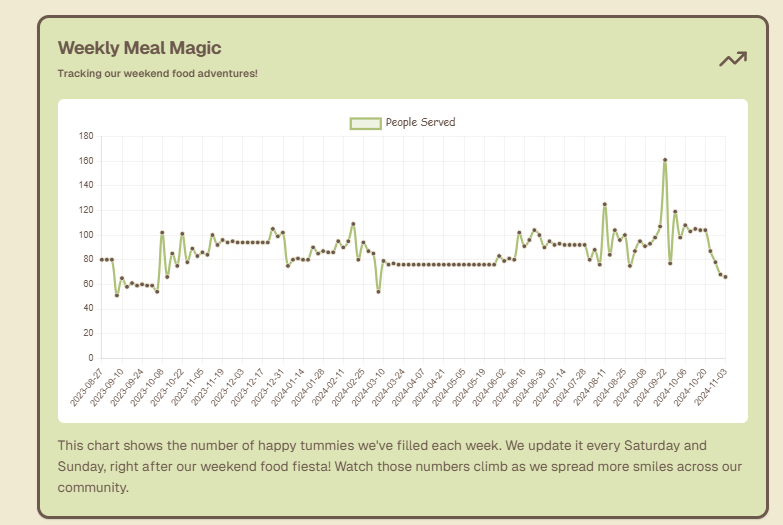
While volunteering with ObsCanFeedYou, I noticed a gap in tracking the impact we were making each weekend. Seeing an opportunity, I set out to create a custom website to help the team record and visualize the number of people fed weekly.
Starting from scratch, I taught myself web development, covering both front-end and back-end skills. I built a database to store feeding data and developed a user-friendly interface to display weekly stats. To make data input easier for volunteers, I integrated WhatsApp using an API, allowing them to send a simple message to update the database.
This project gave me hands-on experience in full-stack development, database management, and real-time communication—tools that help ObsCanFeedYou keep track of its impact in the community effortlessly.
Technologies Used
- Languages: TypeScript, JavaScript, Python, SQL
- Frontend: React, Tailwind CSS
- Backend: Next.js, Flask
- Database: Supabase
- ORM: Prisma
- Communication/API: Vonage API for WhatsApp integration
- Hosting/Deployment: Render, Vercel
Detailed Notes
ObsCan Website - Project Outline
Economic Analysis: India vs South Africa
Summary
This project provides a comprehensive comparative analysis of the economies of India and South Africa, exploring their strengths, challenges, and growth potential. Key areas of focus include macroeconomic metrics, sectoral contributions, trade dynamics, foreign direct investment (FDI), and future outlooks.
The analysis is built on detailed research, using data-driven insights from key indicators such as GDP, CPI, trade balances, and FDI inflows. The project examines the structural drivers of each economy, their respective challenges (e.g., policy stability, resource dependency, skill gaps), and their opportunities for innovation, growth, and reform.
Work Performed:
-
Data Collection and Analysis:
- Compiled historical and current economic data for both countries from reliable sources.
- Evaluated metrics such as GDP trends, sector contributions, and trade balances.
-
Sectoral Insights:
- Assessed the dominant industries in each country, benchmarking key sectors like IT, mining, and manufacturing.
- Highlighted growth potential in emerging sectors such as renewable energy and advanced technologies.
-
Comparative FDI Analysis:
- Investigated FDI inflows, identifying drivers and challenges for attracting foreign investments.
- Analyzed policy impacts and economic conditions influencing investor confidence.
-
Trade Dynamics:
- Examined export-import profiles and major trading partners for both countries.
- Identified vulnerabilities and opportunities for trade diversification.
-
Future Outlook:
- Summarized strengths, weaknesses, and actionable opportunities for sustained growth in both economies.